Making Sense of the Metadata
Decluttering my camera kit (and my brain)…
Warning: this post may lean introspective and possibly self-indulgent. Think of it as me talking to myself in public - if it sparks a comment or an alternate view, even better. The TL;DR version: doing a deep dive into the metadata has given me the confidence to make some changes by selling a fair amount of kit.
A typical 2025 shot - ‘natural’ perspective, decent depth of field, nice, but not hero light and a simple composition.
Barns Ness Lighthouse | Leica M10 Summicron 50mm f/8.0. 1/250s. ISO 100
There’s probably a second post coming about my photographic plans for 2026 - subjects, aesthetics, and approach - but for now, this is the practical stuff: the kit I have, the kit I need, and the changes I’ve made.
I’ve taken more photographs this year than in any other year. It’s been fun - hugely so - but it’s also consumed a ridiculous amount of time and attention. Enough that I felt the need to pause, look back, and reflect. A couple of themes emerged from this review, and I wanted to get them down in writing to bring some structure to my plans for 2026.
My Shooting Style Has Changed
This is one of my favourites from the year. Again, the set up is pretty straightforward: a 35mm focal length on a crop sensor (about 53mm equivalent), medium aperture and a simple composition. The X-Pro3 (now sold) was a vain attempt to hold back the Leica purchase.
Berwick Lighthouse | Fujifilm X-Pro3 Fujifilm XF 35mm f/7.1 1/60s ISO 100
Before buying or selling gear, it’s worth looking at how I actually shoot today. Happily, digital photography makes this easy, especially if you use a cataloguing application like Lightroom. I suspected my style had shifted since our US trip in 2024. Back then, I noted that my images were out of step with what I enjoyed, and I wanted to move toward a more natural, documentary style.
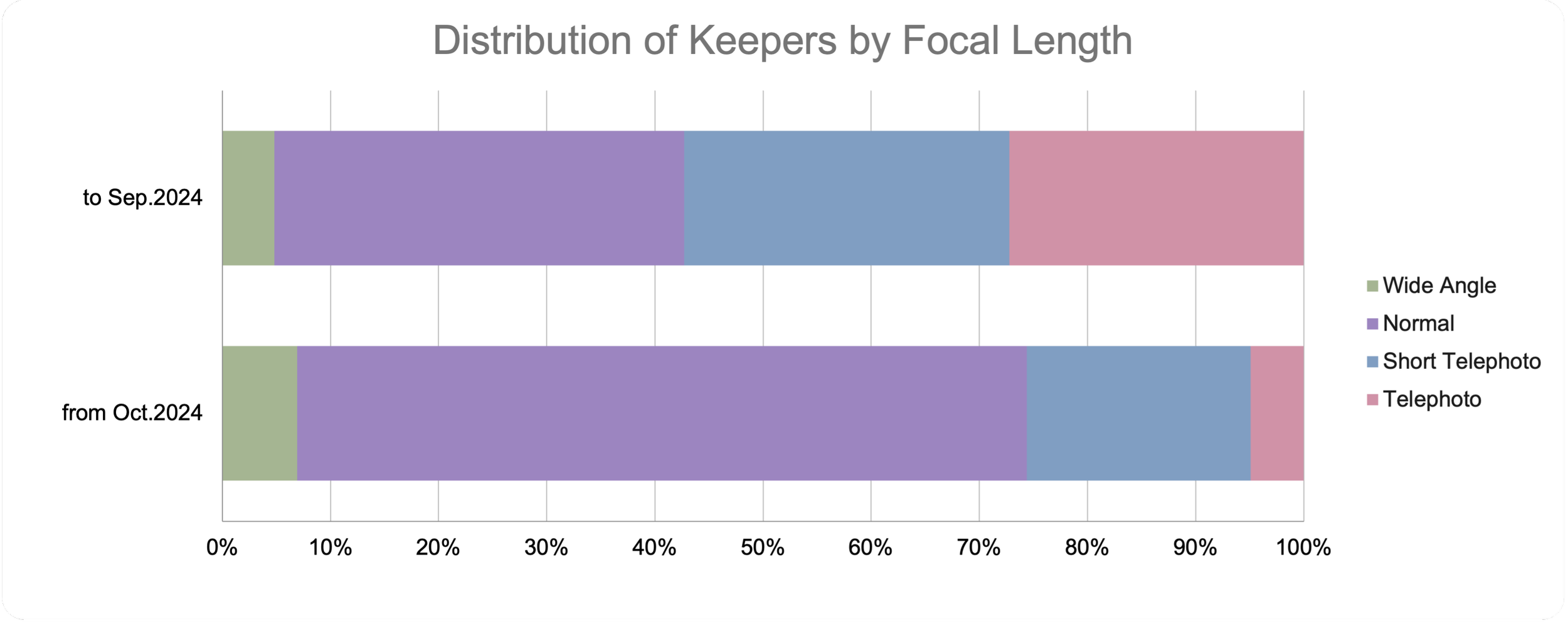
So, did I listen to myself? To find out, I looked first at focal length - a good proxy for perspective. I broke down five years of ‘keeper’ shots into four categories:
Wide Angle: <24mm
Normal: 24–70mm (oddly, a lens I don’t own)
Short Telephoto: 70–200mm (weirdly, I own two!)
Telephoto: 200mm+
The chart shows the split both before and after the US trip (the point at which I think I recognised the disconnect).
Digging Into the Data
While I’m reaching for wide angles lenses less these days (and often don’t bother putting one in the bag), I am enjoying the extra versatility at the short end of the Sony FE 20-70mm. It’s not a length I use too often, but it does account for about two thirds of all my wide shots.
Forth Bridge | Sony A7R V Sony FE 20-70mm at 20mm f/5.6 1/50s ISO 400
The differences are stark:
The proportion of long telephoto shots has collapsed, from over 25% of keepers to under 5%. This is not because I’m shoot less action - those shots rarely make the keeper pile anyway – but because I’m more selective.
Normal focal lengths dominate, up from a third to over two-thirds of my shots. Subjects and aesthetics both play a role and I’ve shot much more of these subjects.
Wide angles surprised me as I’d expected a fall, but looking closer two-thirds of <24mm shots came from the Sony FE 20–70mm F4. It turns out versatility and laziness beats conscious choice.
Short telephoto dipped - less dramatic, but noticeable. My 70–200mm lenses still earn their keep.
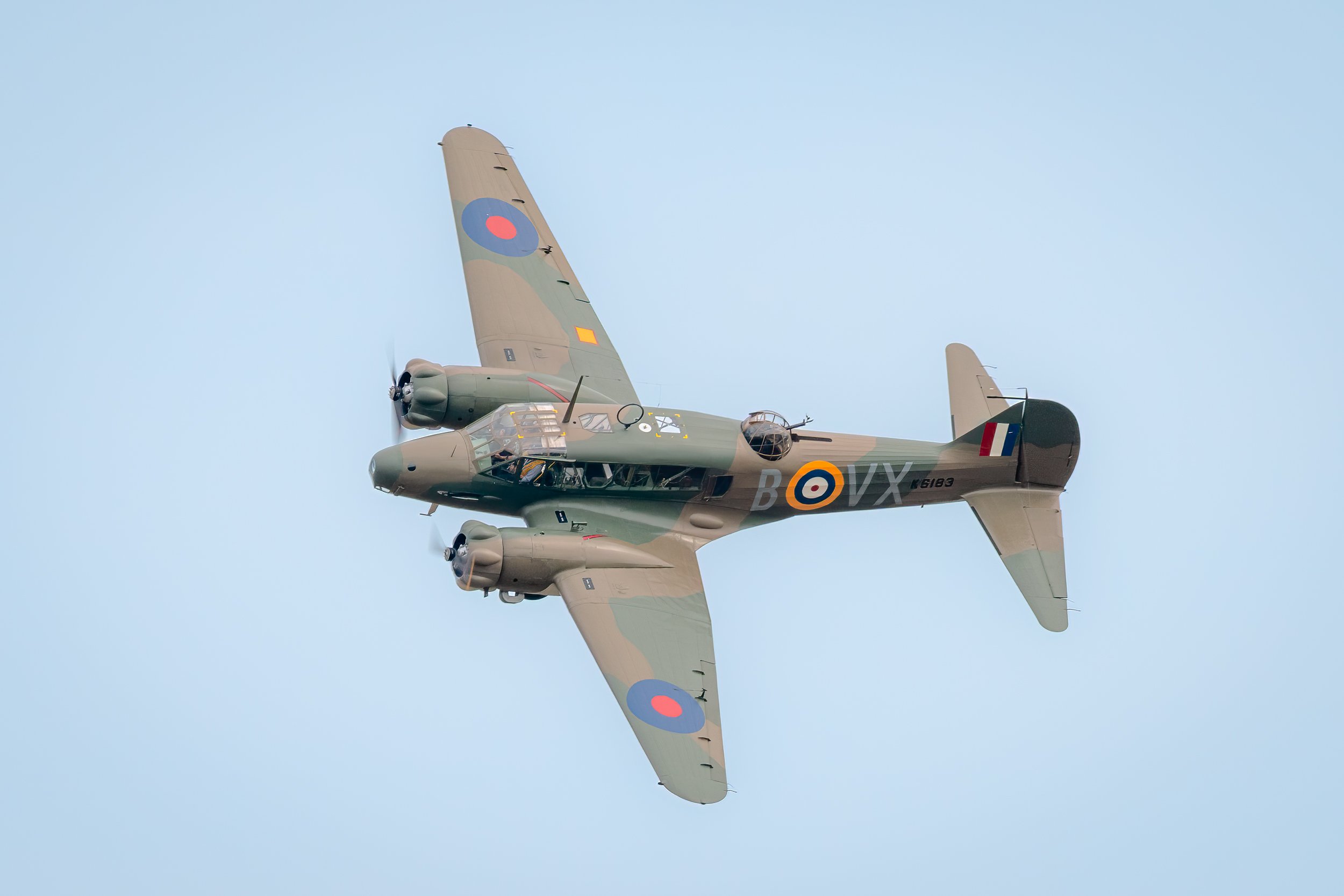
Long lenses play less of a part, but it’s still fun getting out for sports, wildlife or action. This was a pick of the day from a trip to Bempton Cliffs.
Northern Gannets Billing | Sony A9ii Sony FE 300mm + 2.0x TC 600mm f/5.6 1/1600s ISO 320


Digging deeper into the ‘normal’ range, images shot with a natural field of view more than doubled. Focal lengths between 35mm and 60mm now make up nearly 40% and these are the ones I rate most highly.
Aperture tells its own story: despite owning fast primes, less than 10% of my shots are wider than f/2.8. Around 60% sit between f/5.6 and f/8.
My happy place, as dull as it sounds, seems to be 50mm at f/8.
Is there a Point?
Ordinarily, this kind of breakdown ranks somewhere between mildly interesting and a cure for insomnia. But the point is that gear decisions are expensive. Buying costs money; selling costs money and regret if you get it wrong.
TL;DR - I had too much kit. To keep myself sane, I needed to offload gear—and knowing what focal lengths and apertures matter made that easier.
Background: How did I Get Here?
I’ll be up front: what follows isn’t normal, even for most photographers. But then I’ve never made any claims of normality…
I enjoy the technological aspects of photography and, fortunately, can indulge without making sacrifices. But too much choice leads to decision fatigue, and that kills enjoyment.
When I switched from Canon to Fujifilm in 2020, I went all in. I sold all the EF kit and simply filled the gaps on a Fujifilm system that I’d been quietly expanding since 2016. I reasoned that if it didn’t work out it wouldn’t be a disaster. Canon appeared intent on killing the EF mount and so, if I wanted to move back to full-frame, I’d want to start from scratch anyway.
It mostly worked. But gaps remained - sports and action in particular - so I added a Sony A9 II and couple of long lenses. I’ve since added an A7R V and a wider, but much more considered, selection of lenses. Adding a Leica M10 into the mix simplified nothing!
Bluntly, I had too much kit, too much duplication and no clear strategy. Something needed to change…
Scaling Back Fujifilm
With use, my appreciation for Sony has grown. The ergonomics still feel like they were designed by engineers, not photographers, but the results are exceptional and the kit compact. Meanwhile, despite superb handling and ergonomics my frustrations with Fujifilm’s X-Mount system have increased.
While the bodies are capable, the lens line looks tired and in need of some TLC. There is no ‘holy trinity’ and any development has been uninspiring refreshes of shorter primes. For anyone looking for a ‘do anything’ system, the lens line doesn’t deliver.
This probably best represents why I originally bought into Fujifilm. The relatively lightweight body combined with a compact, versatile kit lens meant that the camera could be taken on short outings and business trips without being a burden. Some of those advantages have been eroded by developments with other systems.
Last Light, Boston Harbour | Fujifilm X-Pro2 XF15-55mm at 35mm f/8.0 50s ISO 100
Knowing I shoot less at the long end, rarely need ultra-wide, and don’t rely on wide apertures made the winnowing easier. Three bodies have gone plus all the long lenses, ultra-wides and pro-spec zooms.
The result is a kit cupboard that feels more purposeful, less cluttered and less likely to trigger existential gear crises. A physical and mental decluttering has been achieved.
Where Am I Left?
I still have more gear than most people would deem sane, but here’s the summary:
Sony. Covers 90%+ of my serious needs. Two bodies (A7R V and A7 V), lenses from 16mm to 600mm and ready to tackle almost any genre. The only gap seems to be a fast normal prime.
Fujifilm. Four primes (13mm, 27mm, 50mm, 90mm) plus a compact zoom. My “going for a walk” kit — small, discreet and fun.
Leica. Pure indulgence. For when process matters as much as results.
Have I Finished?
There is something really quite satisfying about composing and shooting at a natural focal length, but that’s for another time…
Aldeburgh | Sony A7R V Sony FE 20-70mm at 40mm f/11 0.8s ISO 100
Yes. And also no. This post was about camera gear and the kit shift is now pretty much done. The creative stuff — subjects, aesthetics and goals, the ‘touchy-feely’ stuff — all remains unresolved and matters more. That’s a story for another post and for the New Year. Look forward to more ramblings…